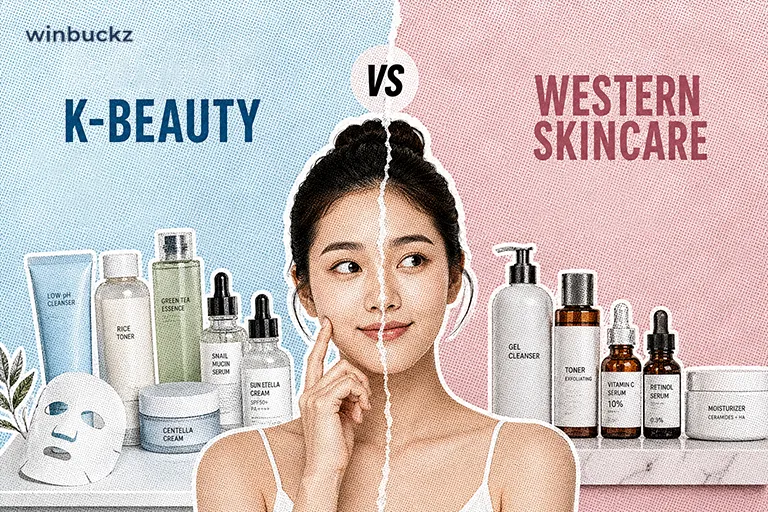
Somewhere inside this skincare chaos, one debate completely took over the beauty industry: Korean skincare vs Western skincare. And honestly, once you start noticing the differences between the two, it becomes impossible to ignore.
Korean skincare vs Western skincare
And honestly, people are obsessed with it for a reason.
The two worlds of beauty are constructed on totally different philosophies. Korean beauty is hydration, preventive, and long-term skin health. Western skincare is more likely to emphasize corrective, active, and noticeable change.
One approach says: “Protect your skin gently.” The other says, “Fix the problem fast.”
And modern beauty lovers are now mixing both philosophies together while pretending they are not emotionally attached to their serums.
Korean Skincare Feels Like Self-Care Before It Feels Like Beauty
One of the biggest reasons Korean skincare products exploded globally is that they feel comforting.
The textures are softer. The routines feel slower. The packaging feels calmer.
Even applying the products feels oddly therapeutic.
Korean beauty rarely approaches skin aggressively. Instead of treating your face like a problem waiting to be corrected, the focus is usually on:
- hydration,
- barrier support,
- prevention,
- soothing ingredients,
- and consistency over intensity.
The milder treatment was so welcomed after years of coarse skin-care fads that had left individuals with irritated, over-exfoliated skin.
No surprise retailers like Sephora and Ulta Beauty rapidly expanded Korean beauty categories as consumer interest skyrocketed.
Searches for Ulta Beauty skin care products increasingly focus on glow serums, calming moisturizers, lightweight essences, and hydration-focused routines rather than just strong treatment products.
Beauty consumers no longer just want “perfect” skin. They want healthier-looking skin.
Western Skincare Treats Skin Like a Science Experiment
Western skincare approaches beauty very differently. Instead of focusing primarily on prevention, many Western brands prioritize visible correction and measurable improvement. That is exactly why brands like The Ordinary became internet-famous almost overnight.
The rise of The Ordinary skincare changed beauty culture completely because consumers suddenly became obsessed with ingredient-focused beauty and science-backed routines.
| Popular Western Skincare Focus | Common Ingredient Trends |
| Acne treatment | Niacinamide |
| Texture correction | Glycolic acid |
| Anti-aging | Retinol |
| Pigmentation correction | Peptides |
| Targeted skincare concerns | Exfoliating acids |
People no longer desire ambiguous beauty claims. They desire ingredient percentages, clinical formulations, and visible outcomes. And to be frank, The Ordinary products are absolutely brilliant for specific skincare issues and for quick results.
The downside? Sometimes people accidentally overdo strong skincare in an attempt to achieve results faster. That is exactly why conversations around “repairing the skin barrier” became half the internet’s personality recently.
Korean Beauty Sells Calmness. Western Beauty Sells Control.
This is the real difference hidden inside the Korean skincare vs Western skincare conversation. Korean beauty feels emotional, while Western beauty feels strategic.
| Korean Skincare Focus | Western Skincare Focus |
| Skin comfort | Stronger correction |
| Hydration | Active ingredients |
| Natural glow | Visible improvement |
| Prevention | Optimization |
| Recovery | Faster results |
Neither side is completely right or wrong. But they create very different relationships with skincare, which is exactly why modern beauty consumers increasingly borrow from both worlds rather than choosing only one.
Makeup Changed Because Skincare Changed
One of the most interesting things about modern beauty culture is how skincare has completely reshaped makeup trends, too.
A few years ago, heavy matte makeup dominated beauty culture. Now? Consumers increasingly want makeup that makes skin look naturally healthy.
Searches around Ulta Beauty makeup now heavily focus on:
- skin tints,
- serum foundations,
- glow primers,
- lightweight finishes,
- and radiant complexions.
Korean beauty heavily influenced that shift.
Brands like NYX Cosmetics adapted quickly as glow-focused beauty became mainstream. Interest in NYX Professional Makeup products continues to grow as consumers increasingly want makeup that works alongside skincare rather than completely covering it.
At the same time, NYX Cosmetics sales events trend heavily online, as younger beauty consumers now experiment with makeup trends more frequently than they stick to a signature look.
Beauty became more playful and less perfection-focused.
Luxury Skincare Looks Completely Different Now
The definition of luxury skincare subtly shifted in the past few years. Premium beauty is no longer seen by consumers as an attribute of costly creams and theatrical branding. Today, luxury is becoming softer, calmer, and more focused on healthy-looking skin rather than heavy perfection.
| Traditional Luxury Skincare | Modern Luxury Skincare |
| Gold packaging | Healthy-looking skin |
| Celebrity campaigns | Hydration and calmness |
| Expensive creams | Barrier-friendly routines |
| Dramatic beauty image | Natural glow and comfort |
That is one reason the Korean beauty philosophy became so influential globally. Meanwhile, Western luxury beauty brands adapted in different ways.
Searches for MAC skincare products increased significantly as consumers began expecting makeup brands to deliver skincare-focused beauty, too. Even MAC Cosmetics discount campaigns increasingly highlight glow-enhancing products, hydration formulas, and skin-first beauty rather than only traditional full-coverage makeup.
Beauty consumers still want results. But they no longer want their routines to feel exhausting.
Cult Beauty Turned Skincare Into Internet Culture
Another reason the Korean skincare vs Western skincare debate became so massive online is that beauty shopping itself changed completely.
The discovery culture turned skincare into a phenomenon, with platforms like Cult Beauty leading the way.
Consumers no longer purchase products and remain loyal forever.
Now they:
- Chase launches,
- compare routines,
- collect samples,
- follow skincare influencers,
- and constantly test trending products.
Cult Beauty product searches peak whenever a product goes viral online, as more and more people use skincare for entertainment and identity.
The same applies to cult makeup products, which now completely blur the line between skincare and cosmetics.
At the same time, programs like Sephora Beauty Insider and retailer-driven beauty rewards normalized endless experimentation. The internet turned skincare into a hobby.
The Real Winner? Probably Both
Here is the truth most skincare lovers eventually realize: both skincare philosophies work well, just in very different ways. Korean skincare is excellent for hydration, prevention, sensitive-skin support, barrier repair, and maintaining that long-term, healthy glow people obsess over online. Western skincare, on the other hand, performs incredibly well for acne treatment, resurfacing, pigmentation correction, anti-aging, and faster, more visible transformation.
That is exactly why modern beauty consumers rarely stay loyal to only one side anymore. A realistic skincare shelf today usually includes Korean essences, calming moisturizers, and glow toners sitting right beside retinol serums, exfoliating acids, and targeted The Ordinary skincare treatments.
The future of the best skincare routine is no longer about choosing East or West; it is about understanding what your skin needs and finding the balance between gentle care and effective correction.
FAQs
Why is Korean skincare so good?
The reason Korean skincare became popular worldwide is that it pays close attention to hydration, prevention, and the preservation of the skin barrier. The majority of Korean skincare lines use light formulations and soothing ingredients to promote healthier-looking skin over the long term, rather than tackling issues as they arise.
Can you mix K-beauty products with Western skincare?
Yes, and most skincare lovers already do.
Many people combine Korean hydration-focused products with stronger Western activities. For example, someone may use Korean toners and moisturizers alongside retinol or The Ordinary products for targeted correction and anti-aging benefits.
Is K-beauty suitable for all skin types, including sensitive skin?
In many cases, yes.
Korean beauty is particularly appealing to individuals with sensitive skin, as many formulas prioritize calming ingredients, hydration, and barrier support. Nevertheless, skincare will always depend on the specifics of individual ingredients and personal skin concerns, and thus, patch testing remains the best option before committing to a new routine.
Why does Korean skincare focus so much on hydration?
Hydration is considered one of the core foundations of healthy skin in Korean beauty philosophy. Rather than targeting only visible skin concerns, many Korean skincare products are designed to maintain the skin barrier in a balanced, calm, and well-hydrated state over the long term. This is why Korean routines often include lightweight hydrating layers, such as toners, essences, and serums, that help skin maintain a healthier glow naturally.
Is Western skincare suitable for South Asian skin tones?
Yes, Western skincare can work very well for South Asian skin tones, especially for concerns like pigmentation, acne marks, texture, and uneven skin tone. However, because South Asian skin can sometimes be more sensitive to irritation, many people balance stronger Western active ingredients with hydrating Korean skincare products for a gentler routine.