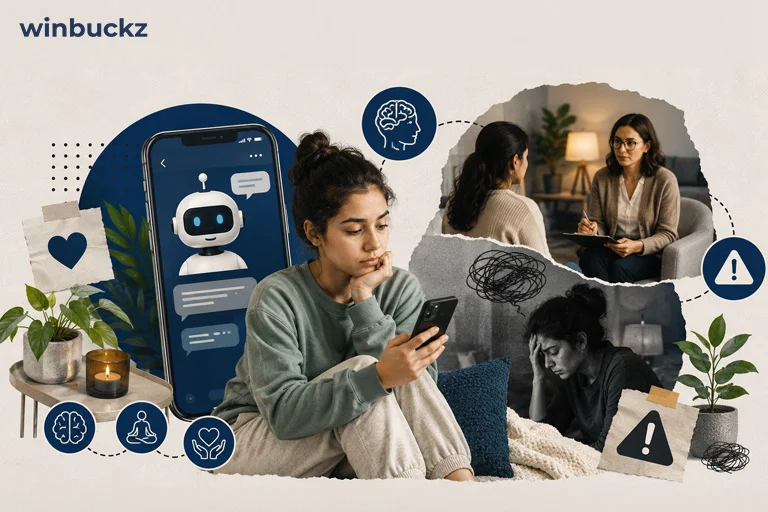
Feeling overwhelmed, anxious, or emotionally drained used to mean waiting weeks for a therapy appointment or struggling to find mental health resources. Today, many people turn to a new 24/7 option: AI therapy chatbots.
Offering coping strategies and a judgment-free space for conversation, these digital tools have quickly become one of the most discussed developments in mental healthcare. Their popularity reflects broader AI wellness trends reshaping how people approach self-care, emotional support, and well-being.
As these tools become more sophisticated, an important question remains. Are AI therapy chatbots genuinely helping people manage their mental health or creating a dangerous substitute for professional care?
The answer is more complex than many people realize.
Why AI Is Entering the Mental Health Conversation
Mental health services remain difficult to access for millions worldwide. Long wait times, high costs, geographical limits, and social stigma often prevent people from seeking help when they need it most.
This gap has created an opportunity for technology.
Modern AI therapy chatbots use natural language processing and machine learning to simulate supportive conversations. While not licensed therapists, they guide users through journaling exercises, mindfulness techniques, stress management strategies, and emotional check-ins.
For many users, the appeal is simple. Support is available immediately, privately, and without the pressure that sometimes accompanies face-to-face conversations.
The Potential Benefits of AI Mental Health Tools
Much of the growing interest in AI therapy chatbots comes from the value they provide.
One of the most widely discussed benefits of AI therapy is accessibility. Someone struggling with stress at midnight can engage with a chatbot immediately, rather than waiting days or weeks for an appointment.
Consistency is another advantage. Unlike traditional services with limited office hours, AI tools are available whenever users need support.
Many people appreciate the reduced fear of judgment. Opening up about emotional challenges can be difficult, and some users find it easier to express themselves through technology.
Among the most notable AI therapy benefits are:
- Immediate emotional support
- Guided mindfulness exercises
- Mood tracking and journaling assistance
- Stress-management recommendations
- Improved awareness of emotional patterns
These capabilities have helped position AI therapy chatbots as useful supplementary tools for everyday mental wellness.
Where AI Support Starts to Become Risky
The biggest concern about AI therapy chatbots is not what they can do but what they cannot.
Artificial intelligence lacks human understanding, lived experience, empathy, and clinical judgment. While chatbots recognize language patterns, they cannot truly grasp the complexity of human emotions.
This limitation becomes especially important during situations involving trauma, severe depression, self-harm, substance abuse, or mental health crises.
A licensed therapist can evaluate context, identify subtle warning signs, and adapt treatment based on a person’s unique circumstances. AI systems are not capable of providing that level of care.
As a result, experts increasingly emphasize that AI therapy chatbots should support mental health services, not replace them. People are beginning to view AI as a complete substitute for professional treatment.
Understanding the Difference Between Support and Treatment
One reason these tools generate debate is that they occupy a space between self-help and healthcare.
For individuals experiencing everyday stress, work-related anxiety, mild emotional challenges, or general wellness concerns, AI tools may provide useful guidance and structure.
However, treatment is different from support.
Mental health treatment requires professional assessment, evidence-based interventions, and ongoing monitoring. AI can assist with some wellness activities but cannot replicate the therapeutic relationship between a patient and a qualified mental health professional.
This distinction is becoming more important as AI wellness trends gain momentum.
The most responsible use of AI involves recognizing both its strengths and its limitations.
What Research and Experts Are Saying
The mental health community remains cautiously optimistic.
Researchers acknowledge AI therapy benefits include improved accessibility, reduced barriers to seeking help, and increased engagement with wellness practices. Experts also raise concerns about accuracy, privacy, accountability, and overreliance.
Many professionals believe AI may play a valuable role in preventative mental healthcare by helping users identify concerns earlier and encouraging them to seek professional support when needed.
For anyone interested in understanding both the opportunities and risks in greater depth, AI Chatbots For Mental Health – What Works, What Harms, and What’s Next offers valuable insights into how these technologies are evolving and where experts believe they are headed.
The Growing Wellness Technology Ecosystem
AI-powered mental health tools are part of a much larger movement toward technology-driven wellness.
Consumers increasingly use apps, wearables, digital coaching platforms, and personalized health solutions to manage various aspects of their well-being. These broader AI wellness trends reflect a growing desire for convenience, personalization, and data-driven insights.
Interestingly, this shift isn’t limited to mental health.
People are becoming more proactive about every aspect of self-care, from sleep quality and fitness tracking to oral health and daily wellness routines. The common thread is clear: consumers increasingly want accessible tools that help them take a more active role in managing their health.
The Future of AI Mental Health Support
The future of mental healthcare is unlikely to be entirely human or entirely artificial.
Instead, it will probably involve collaboration between technology and trained professionals.
As AI systems improve, they may become better at identifying warning signs, providing personalized wellness recommendations, and helping individuals stay engaged with healthy habits.
However, emotional support, empathy, therapeutic relationships, and clinical decision-making remain fundamentally human responsibilities.
The most promising future is one in which AI therapy chatbots serve as companions and support systems that complement professional care rather than compete with it.
The Bottom Line
The rise of AI therapy chatbots reflects growing demand for accessible mental health support. These tools can provide immediate assistance, encourage self-reflection, and help users build healthier emotional habits.
The potential benefits of AI therapy are significant, particularly for individuals seeking guidance, structure, and everyday wellness support.
However, they are not replacements for therapists, psychologists, or mental health professionals.
When used responsibly, AI can be a valuable addition to a broader mental health strategy. When relied on as a substitute for professional care, it can create serious risks.
The challenge moving forward isn’t deciding whether AI belongs in mental healthcare.
It’s learning where its role should begin and where it should end.
Frequently Asked Questions
AI therapy chatbots are digital tools using artificial intelligence to simulate supportive conversations, offer wellness guidance, and provide mental health resources.
They can be effective for stress management, emotional check-ins, mindfulness exercises, and self-reflection, but are not substitutes for professional therapy.
Significant benefits include accessibility, 24/7 availability, reduced stigma, mood tracking, and guided wellness activities.
No. AI can provide support and educational resources, but it lacks the clinical expertise, empathy, and judgment necessary for mental health treatment.
People increasingly value convenient, personalized, and accessible tools to manage their physical and mental well-being more proactively.