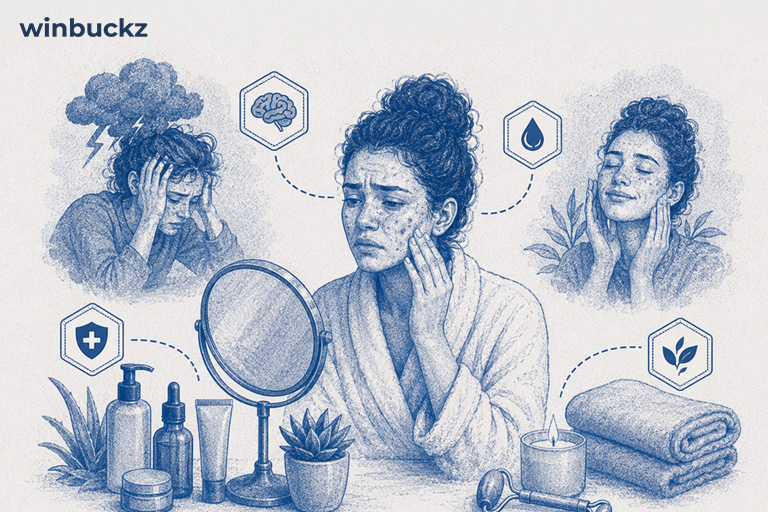
Products that used to work now sting. Redness shows up for no clear reason. You’re breaking out more often, and dry patches just won’t go away, no matter how much moisturizer you use.
If any of this sounds familiar, you’re not imagining things.
Stress can really affect your skin, and more dermatologists are noticing how emotional stress affects skin health. One of the first things to suffer is your skin barrier, which keeps moisture in and blocks out irritants.
That’s why skin barrier repair is now a big focus in skincare. Before you try stronger treatments or the latest trending products, it’s worth making sure your skin’s foundation is healthy first.
What Exactly Is Stress Skin?
“Stress skin” isn’t a medical term, but people often use it to describe changes they notice in their skin when they’re feeling stressed, emotionally or physically.
When you’re stressed, your body releases hormones like cortisol. These changes can cause your skin to produce more oil, weaken its protective barrier, trigger inflammation, and make skin problems harder to control.
As a result, people may experience:
- Redness
- Sensitivity
- Dryness
- Breakouts
- Itching
- Increased irritation
- Uneven skin texture
These symptoms often show up at the same time, which can leave your skin feeling more sensitive and less able to bounce back.
Why Does Your Skin Barrier Matter?
Your skin barrier is your complexion’s first line of defense.
It keeps moisture in and shields your skin from pollution, irritants, allergens, and other environmental stress. If your barrier is damaged, your skin can lose hydration more quickly and become more sensitive.
A lot of people try to fix visible skin problems without looking at the real cause. To repair your skin barrier, it often helps to simplify your routine and let your skin recover naturally.
When your barrier is damaged, even mild products can feel harsh. That’s why it’s important to focus on restoring your skin’s balance.
The Connection Between Stress and Inflammation
Inflammation is one reason why your skin acts differently when you are stressed.
Stress can affect how your body responds to inflammation, which might lead to flare-ups, sensitivity, or visible redness.
Knowing why inflammation appears on your skin can help you see why stress often causes changes in your complexion, even if your skincare routine stays the same.
When inflammation increases, skin may become more reactive to ingredients, weather changes, and environmental triggers that would normally cause little concern.
Signs Your Skin Barrier Needs Repair
If you notice barrier damage early, you can often prevent more serious irritation.
Common signs include:
- Persistent redness
- Tightness after cleansing
- Increased sensitivity
- Flaking or peeling
- Rough texture
- Frequent irritation
- Products suddenly causing discomfort.
If you recognize several of these symptoms, it’s usually better to focus on skin barrier repair instead of adding new active ingredients for other issues.
Sometimes the healthiest approach is simply allowing the skin to recover.
Simplify Your Routine
If your skin feels stressed, using fewer products can actually help.
A lot of people try to fix irritation by adding more products, but this can actually make your skin more sensitive.
To calm your skin, focus on these steps:
- Gentle cleansing
- Hydration
- Barrier support
- Sun protection
Try not to start using several new products at the same time. The aim is to make things easier for your skin, not harder.
This is especially helpful if you want to reduce redness and find skincare that really works.
Focus on Hydration and Barrier Support
Staying hydrated is essential for your skin to recover.
Ingredients like ceramides, glycerin, hyaluronic acid, and fatty acids help your skin stay moisturized and support its natural barrier.
Skincare experts often recommend products designed to repair the skin barrier, as they focus on strengthening your skin rather than just treating individual issues.
Products that support your skin barrier can provide quick relief and strengthen your skin over time.
Choosing Products for Stressed Skin
Some skincare products are not made for sensitive or stressed skin.
When you shop for calming products, choose formulas that focus on hydration and skin barrier repair rather than strong exfoliants or harsh treatments.
People who want to reduce redness often choose products containing soothing ingredients such as niacinamide, oat extract, centella asiatica, and panthenol.
These ingredients can calm visible irritation and help your skin look healthier over time.
Building a Calming Skincare Collection
As awareness grows, more people learn about the importance of skin barrier health; many stores now offer a wider range of gentle skincare products.
Many beauty enthusiasts explore Renee Cosmetics skincare deals for an extra love and care for their personal beauty goals.
More people are choosing barrier-focused skincare, signaling a shift away from harsh routines toward healthier, long-term skin habits. Don’t Overlook Makeup Choices
Don’t Overlook Makeup Choices
If your skin barrier is weak, foundation might look patchy, dry spots can stand out more, and redness can be harder to cover. Many consumers also pay attention to products that complement their skincare efforts. Beauty enthusiasts often explore MAC beauty essentials when selecting makeup products that pair well with calming skincare routines.
Lifestyle Habits Matter Too
Skincare products help, but they’re just one piece of the puzzle. Your daily habits also play a big role in keeping your skin healthy.
Helpful habits include:
- Prioritizing sleep
- Staying hydrated
- Managing stress levels
- Eating a balanced diet
- Exercising regularly
- Limiting excessive alcohol consumption
These habits support overall health and skin barrier repair, so they’re great to add to your skincare routine.
The Bottom Line
Stress can really affect your skin, and you might notice changes when your body is feeling pressured.
If you notice redness, sensitivity, dryness, or irritation, it could mean your skin barrier needs some extra care.
Instead of chasing quick fixes, focus on skin barrier repair through gentle cleansing, consistent hydration, barrier-supporting ingredients, and a simplified routine.
Whether you’re trying redness-reducing products, calming skincare, or new essentials, the main goal is to help your skin recover, rebalance, and feel comfortable again. Often, the best skincare routine is actually the simplest one. ted one.
It’s the routine that lets your skin heal.
Frequently Asked Questions
Skin barrier repair means helping your skin rebuild its natural protective layer. This helps your skin hold onto moisture, protect itself from irritants, and look healthier.
Yes, stress can have a real impact on your skin. It may cause more inflammation, change how much oil your skin makes, weaken your skin barrier, and lead to redness, sensitivity, or breakouts.
Some common signs include redness, dryness, tightness, sensitivity, flaking, irritation, or your usual products suddenly feeling uncomfortable.
Ingredients like ceramides, hyaluronic acid, glycerin, fatty acids, panthenol, and niacinamide are often used to help your skin barrier recover and stay hydrated.
Redness-reducing skincare means using products made to calm irritation, reduce visible redness, and help your skin feel more comfortable.