Students today are used to apps, instant feedback, interactive content, and digital experiences. Because of this, they expect learning to be more engaging too. This change has led teachers to rethink how they teach, and more schools are now using gamification in education.
By adding game features like rewards, progress tracking, challenges, and achievements, schools are finding new ways to make learning more fun while still keeping high educational standards.
What Is Gamification in Education?
Gamification in education means using game-like features in classrooms or other learning settings.
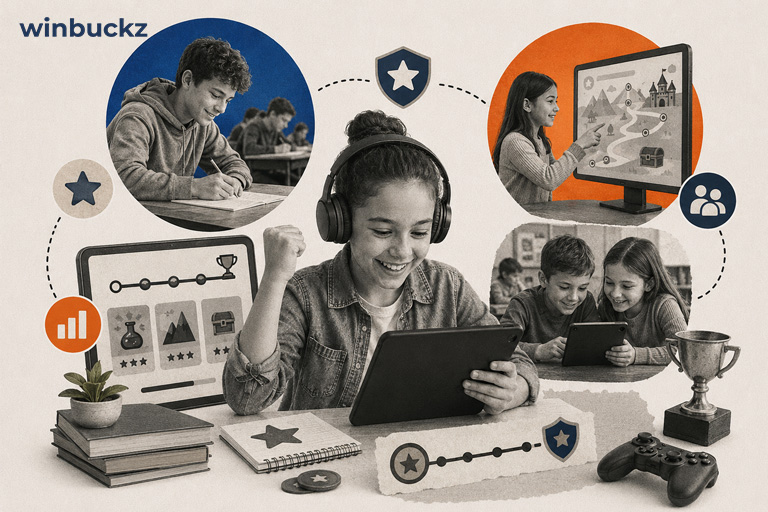
For example, students can earn points for finishing assignments, unlock achievements when they reach certain goals, or join classroom challenges that help them work together and compete in a positive way.
The idea is not to turn education into games, but to use what makes games motivating to help students take part more and learn better.
Because of this, more schools, universities, and online platforms are trying out gamification to make learning more interactive.
Why Students Are Responding to Game-Based Learning
Gamification connects with what naturally motivates people.
People enjoy seeing their progress. When they complete game levels, earn rewards, or reach goals, they can see how far they have come, which keeps them motivated.
In traditional learning, students usually have to wait until the end of a unit or semester to get rewards. Game-based learning, on the other hand, offers smaller milestones along the way, helping students stay motivated as they learn.
Students get feedback right away. This helps them spot mistakes quickly and improve without having to wait for their final grades.
This ongoing feedback is one reason why more educators around the world are paying attention to gamification in learning.
The Science Behind Student Engagement
Students learn best when they take an active part in their education.
Studies show that active learning helps students remember and understand material better. Game-based learning lets students solve problems, make choices, and work with the content instead of just listening.
Competition can be helpful when used carefully. Friendly challenges in class often get students more involved and help them stay on task.
If you want to learn more about why game-based learning is effective, Kahoot’s educational blog has helpful resources on how interactive activities can boost student participation and engagement.
When students care about what they are learning, they tend to stay motivated and remember more.
Technology’s Role in Gamified Learning
As educational technology has grown, it has become much easier to use gamification in the classroom.
Teachers can quickly set up quizzes, competitions, interactive assignments, and group activities. Students join in using laptops, tablets, or smartphones, so these activities fit easily into daily lessons.
Platforms such as Kahoot, Quizizz, and Classcraft are popular because they make it easy to add game elements to classroom activities.
As digital learning environments have expanded, more schools have started using gamification, especially in remote and hybrid classes.
Benefits Beyond Academic Performance
Gamification brings a range of benefits that extend far past simply improving test scores.
Teachers have noticed improvements in several areas, such as:
- Classroom participation
- Student confidence
- Teamwork and collaboration
- Knowledge retention
- Problem-solving abilities
- Motivation and attendance
Students who are usually reluctant to join in often get more involved when lessons use interactive activities and reward systems.
This helps create a classroom where more students feel comfortable sharing their ideas and taking part in lessons.
How Is Gamification Changing Online Education?
Online learning gives students more opportunities, but it also brings new challenges.
Many learners find it hard to stay motivated and engaged in long courses without the structure of a traditional classroom. That’s why gamification is becoming more popular on online education platforms.
Achievement badges, progress tracking, interactive quizzes, and learning milestones help students stay focused on their goals. Rather than feeling overwhelmed by too much content, learners can see their progress one step at a time.
The result is a more engaging learning experience that helps students stay consistent and participate more often. This leads to a more engaging learning experience that helps students stay consistent and take part more often. Many also look for ways to get offers for education programs and learning resources that can make professional development more affordable.
Gamification and Exam Preparation
People often think of exam preparation as long hours of studying, doing the same exercises over and over, and feeling overwhelmed by too much information.
Now, many schools and training programs use gamified learning to make studying more engaging and easier to handle.
Tools like progress dashboards, performance tracking, practice challenges, and instant feedback help students see how they are improving and keep them motivated as they study.
These tools turn big learning goals into smaller steps, which helps students stay focused and committed over time.
When preparing for professional certifications, university entrance exams, or job-related tests, many learners look for deals on study resources before buying materials or signing up for courses.
When paired with good educational content, gamification can turn studying from a stressful task into a more enjoyable and rewarding experience.
What the Future of Gamification in Education Could Look Like
Educational technology is changing quickly.
Tools like artificial intelligence, adaptive learning platforms, virtual reality, and personalized learning are already changing how students use educational materials.
As these technologies improve, gamification in education will probably become more tailored to each student. Lessons could adjust to fit each person’s preferences, strengths, and progress. Than replacing traditional teaching methods, these innovations are likely to complement them, creating more engaging learning environments.
The Bottom Line
Gamification has become popular in education because students tend to learn better when they are actively involved.
When teachers add challenges, rewards, ways to track progress, and interactive activities, they can make learning more motivating and get students more involved.
As gamification becomes more successful in education, it shows that learning can be effective without feeling repetitive or out of touch with students’ everyday experiences.
If used carefully, game-based learning can make education more engaging, interactive, and effective.
This version removes This version takes out all brand names and adds a natural way to link to educational offers wherever you need.
Frequently Asked Questions:
Gamification can be adapted for elementary school students, university learners, professional training programs, and adult education, making it suitable for a wide range of age groups.
Gamification involves incorporating game elements into existing learning activities, whereas game-based learning integrates complete games as part of the educational process.
If not designed effectively, gamification may shift the focus from learning objectives to external rewards. The most effective implementations employ game mechanics to reinforce educational goals rather than supplant them.
Schools are increasingly adopting gamification as it enhances student engagement, encourages participation, improves motivation, and increases enjoyment of lessons while maintaining educational value.
Interactive activities, immediate feedback, and achievement-based systems can support student engagement and confidence, particularly for those who may not thrive under traditional instructional methods.