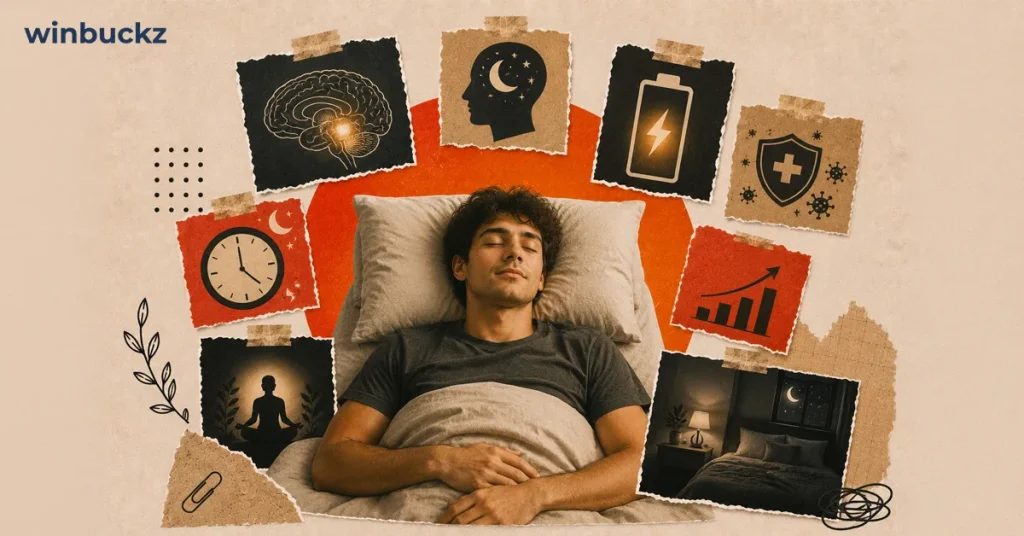
Sleep is not down time. It is not laziness. For years, science has warned us that healthy sleep habits are just as important as diet and exercise, and in 2026, they haven’t been louder about it. The issue is people still view sleep as the bottom of the priority list for their health, not the base upon which all other components are built.
That ends here. It is all you need to know about sleep science and what it requires to achieve a good night’s sleep every night.
What’s going on while you sleep?
To master healthy sleep practices, it is important to be familiar with what the body is doing while you sleep.
It is not a continuous passive sleep state. It passes through different stages such as light sleep, deep sleep, and REM sleep, going through several cycles of these each night. Each stage has a role to play, and cutting out or rushing through any of these will have an effect.
In deep sleep, the body repairs tissue and boosts the immune system. The brain cannot move along the normal sequence of sleep stages, missing out the REM and deep sleep benefits and cognitive function that impact memory, attention, and decision-making skills.
The benefits of a deep sleep extend even more. Collagen starts to increase at night during deep sleep, growth hormone is secreted, and the brain essentially flushes out metabolic waste that accumulates during the day. Consider it your bodily mistreatment at night. If you miss too much, things begin to fall apart.
The real cost of poor sleep
People know that they feel tired and cranky after a poor night’s sleep. Far less is known about the cumulative impact of chronic sleep deprivation.
Sleep is an essential biological process, and inadequate sleep and unmanaged sleep disorders have a negative impact on health, well-being, and public safety. The sleep deprivation effects are far more serious than a single tired morning and are known to build up over weeks and months.
Sleep deprivation is associated with a greater risk of type 2 diabetes, heart disease, and high blood pressure. When you don’t sleep well, you are less likely to stay at a healthy weight, cope with stress, and stabilize your mood.
And it’s more prevalent than one would suspect. Sleeplessness is a serious health problem and is a problem for more than 25% of adults in the United States, which affects their productivity and personal relationships as well as overall safety.
The good news is that the answer isn’t something you need to take the pill for, go on a diet for, or make a drastic change in your lifestyle for. It begins with establishing healthy sleep practices and making an environment supportive to a good night’s sleep.
ALSO READ: The Unpaid Intern: Optimizing Your Brain Health Without a Subscription
Putting together a successful sleep hygiene program

You can think of a sleep hygiene routine as a program of habits and environmental factors that is established to make good sleep easier and more regular. The research shows us this:
Establish a regular bed and morning routine. Your body has an internal clock (circadian rhythm) that keeps you awake or drowsy. One of the best sleep quality tips is to maintain a consistent sleep schedule, which means getting up at the same time every day, even Sundays. Maintaining a consistent sleep schedule, getting up at the same time each day, including weekends, is one of the best sleep quality tips. This clock is thrown off by irregular sleeping habits and makes it difficult to get a good night’s sleep.
Make your bedroom cool, dark, and quiet. One of the most neglected sleep quality tips is temperature. To fall asleep and stay asleep, your core temperature must decrease. The hot environment directly interferes with that process, which is why people would like to use the cooling mattress for better sleep. Options have become more and more popular among people with high standards for their sleep hygiene.
Don’t cut out caffeine as late as you do. Most people are aware of the relationship between caffeine and sleep, but they don’t realize the length of time it remains in the body. Caffeine can be a problem if it’s consumed too close to bedtime, so try to restrict intake after noon.
Expose to natural light in the daytime. One of the key circadian rhythm factors that promotes quality sleep is light, particularly sunlight. Exercise is also easier at night and provides numerous health benefits.
Wind down intentionally. It is important to note that the hour before sleep has even more significance than most people think. Alertness cues to the brain include screens, stressful conversation, and heavy eating. A change to a relaxing replacement, reading, light stretching, or lowering the lights makes the transition to sleep much smoother. If you’re troubled with symptoms like anxiety or insomnia, here are 10 tips to calm your anxiety, a very comprehensive and research-backed guide.
Why your mattress matters more than you think
You can have the best sleep hygiene routine in the world and still struggle if the surface you are sleeping on is working against you.
93% of individuals say a mattress is a key part of their high-quality sleep. However, the majority of people change their mattress less frequently than they need to and don’t realize how the bedroom mattress impacts the quality and depth of sleep.
Mattresses that are too soft can prolong sleep cycles and make it harder to get a full night’s sleep, even after 8 hours, while too-hard mattresses can shorten sleep cycle duration and cause a decrease in deep sleep. A correct mattress can help maintain spine alignment and enables the body to transition through the stages of sleep without interruption.
That’s where buying the best mattress for quality sleep really is an investment in health.
Casper is known for its pressure-relieving foam technology that truly conforms to your sleeping style.
If you have been thinking about upgrading your setup, browsing through Casper sleep products coupons before you buy is the kind of move that saves you a decent amount without compromising on what you are getting. Their seasonal promotions in particular tend to be worth the wait.
Purple takes a completely different approach with its polymer grid design, engineered to neutralize pressure points while keeping the sleep surface cool throughout the night. For anyone who wakes up overheated or restless, Purple sleep products offers are worth checking out before committing.
The cooling architecture that Purple builds into its products is genuinely one of the better solutions for hot sleepers chasing uninterrupted rest.
For those who need more than the standard options can deliver, the Tempur-Pedic cooling mattress sits in its own category. Its adaptive material responds to your body heat and weight, providing support that feels almost personalized. Before making that kind of investment though, looking into Tempur-Pedic cooling mattress discounts can take a significant amount off the price and make the premium segment far more accessible than it first appears.
The bottom line
Sleep is the one health tool that costs nothing to improve and affects everything else. Better focus, stronger immunity, healthier weight, more stable mood, and lower risk of chronic disease all result from consistently good sleep.
Building genuine healthy sleep habits is not complicated. It means consistent sleep and wake times, a proper sleep hygiene routine, a sleep environment that supports rest, and a mattress that works with your body rather than against it.
Start with one change tonight. The difference it makes by next week will tell you everything you need to know.
Frequently Asked Questions:
Healthy sleep habits are the routines and surroundings that help you get regular, good-quality rest. They are important because sleep affects your immune system, mental health, weight, and risk for long-term diseases.
Most adults need 7 to 9 hours of sleep each night without waking up often. Getting good-quality sleep is just as important as the number of hours.
Not getting enough sleep over time can raise your risk for heart disease, type 2 diabetes, high blood pressure, weaker immunity, memory problems, and mood issues. These problems develop slowly, so people often do not notice them right away.
Deep sleep helps your body repair tissues, release growth hormones, strengthen your immune system, and clear waste from your brain. Missing deep sleep often can speed up aging and make you more likely to get sick. due to illness.